Antenatal
UNDERSTANDING CANCER During Your Childbearing Years
May 29, 2026
|
129 views
During Your Childbearing Years
An Antenatal Education Guide for Expectant Mothers & Families
Why This Guide Matters?
Cancer can affect women at any age, including during pregnancy and the reproductive years.
Finding cancer early gives you the best chance of successful treatment.
This guide uses simple, everyday language to help you understand what cancer is, which types are most common in women your age, warning signs to watch for, what happens if cancer is found during pregnancy, and how to stay healthy.
You do not need to be afraid. Knowledge is your most powerful tool.
SECTION 1: What Is Cancer?
Cancer is not one single disease. It is actually a group of many diseases. To understand what cancer is, think of it this way:
Your body is made of billions of tiny building blocks called cells, just like a house is made of bricks.
Normally, cells grow, do their job, and then die when they get old or damaged. New cells replace them — this is healthy.
Cancer happens when some cells stop following this rule. They start growing out of control, do not die when they should, and can pile up to form a lump (called a tumour) or spread to other parts of the body.
Is every lump or tumour cancer?
No! Many lumps and tumours are BENIGN — this means they are NOT cancer. A benign tumour stays in one place and does not spread. A MALIGNANT tumour is cancer — it can grow into nearby tissues and travel to other parts of the body through the blood or lymph system.
What does 'spread' mean?
When cancer cells break off from the original tumour and travel to a new part of the body, doctors call this METASTASIS (meta-STA-sis). For example, breast cancer that spreads to the lungs is still called breast cancer, not lung cancer. This is why early detection is so important — it is easier to treat cancer before it spreads.
SECTION 2: Cancers Most Common in Women of Childbearing Age
Women between the ages of 15 and 45 can develop many types of cancer, but these are the most common ones you should know about:
Breast Cancer: Cancer that starts in the breast tissue. It is the most common cancer in women worldwide.
Early Warning Signs: A new lump in the breast or armpit; a change in breast shape or size; nipple discharge (especially blood); skin dimpling like orange peel; nipple turning inward.
Cervical Cancer: Cancer that starts in the cervix, which is the lower part of the womb (uterus) that connects to the vagina.
Early Warning Signs: Unusual vaginal bleeding (e.g., after sex, between periods, or after menopause); unusual discharge; pelvic pain during sex.
Ovarian Cancer: Cancer that starts in the ovaries, the two small organs that make eggs each month.
Early Warning Signs: Bloating that does not go away; pain in the belly or pelvis; feeling full quickly when eating; needing to urinate more often.
Thyroid Cancer: Cancer that starts in the thyroid gland, a butterfly-shaped gland in the front of your neck.
Early Warning Signs: A lump or swelling in the neck; trouble swallowing; a hoarse voice that does not get better; swollen glands in the neck.
Colorectal Cancer: Cancer that starts in the large intestine (colon) or the rectum (the last part of the bowel).
Early Warning Signs: Blood in the stool; change in bowel habits lasting more than a few weeks; unexplained weight loss; stomach cramps.
Melanoma (Skin Cancer): A type of skin cancer that starts in the cells that give skin its colour (melanocytes). It can be very dangerous if not caught early.
Early Warning Signs: A mole or skin spot that changes shape, size, or colour; a sore that does not heal; dark streaks under a nail.
SECTION 3: Cancer and Pregnancy
Finding out you have cancer during pregnancy can be very frightening. But it is important to know: cancer during pregnancy is rare, and many women have gone on to have healthy babies and recover from cancer successfully.
How common is cancer in pregnancy?
About 1 in every 1,000 to 2,000 pregnant women is diagnosed with cancer. The most common types found during pregnancy are breast cancer, cervical cancer, lymphoma (cancer of the immune system), and melanoma.
Can cancer harm my baby?
In most cases, cancer itself does NOT cross the placenta (the organ that feeds your baby). Your baby is generally protected. However, some cancer treatments can be harmful to a developing baby, especially in the first 3 months (first trimester). Your medical team will work very carefully to protect both you and your baby.
Important: Treatment IS Possible During Pregnancy
Many women can safely receive cancer treatment while pregnant.
Surgery is often the safest option and can usually be performed during pregnancy.
Some chemotherapy drugs can be given safely AFTER the first 3 months of pregnancy.
Radiation therapy near the womb area is generally avoided during pregnancy.
Your doctors will make a personalised plan that considers both your needs and your baby's safety.
You do NOT always have to choose between treating the cancer and having your baby.
Will I need to deliver my baby early?
Sometimes, doctors may recommend delivering the baby a little early (but not too early — usually after 34–37 weeks) so that full cancer treatment can begin. This decision is made very carefully based on your specific situation, how far along the pregnancy is, and the type of cancer.
What about breastfeeding during cancer treatment?
If you are receiving chemotherapy or certain targeted medicines, breastfeeding is NOT recommended because these drugs can pass into breast milk and harm the baby. Speak to your doctor about what is safe in your specific case.
SECTION 4: Risk Factors — What Increases Your Chance?
A risk factor is anything that increases your chances of developing cancer. Having a risk factor does NOT mean you will definitely get cancer. And many people who develop cancer have no obvious risk factors at all. But knowing your risks helps you stay alert.
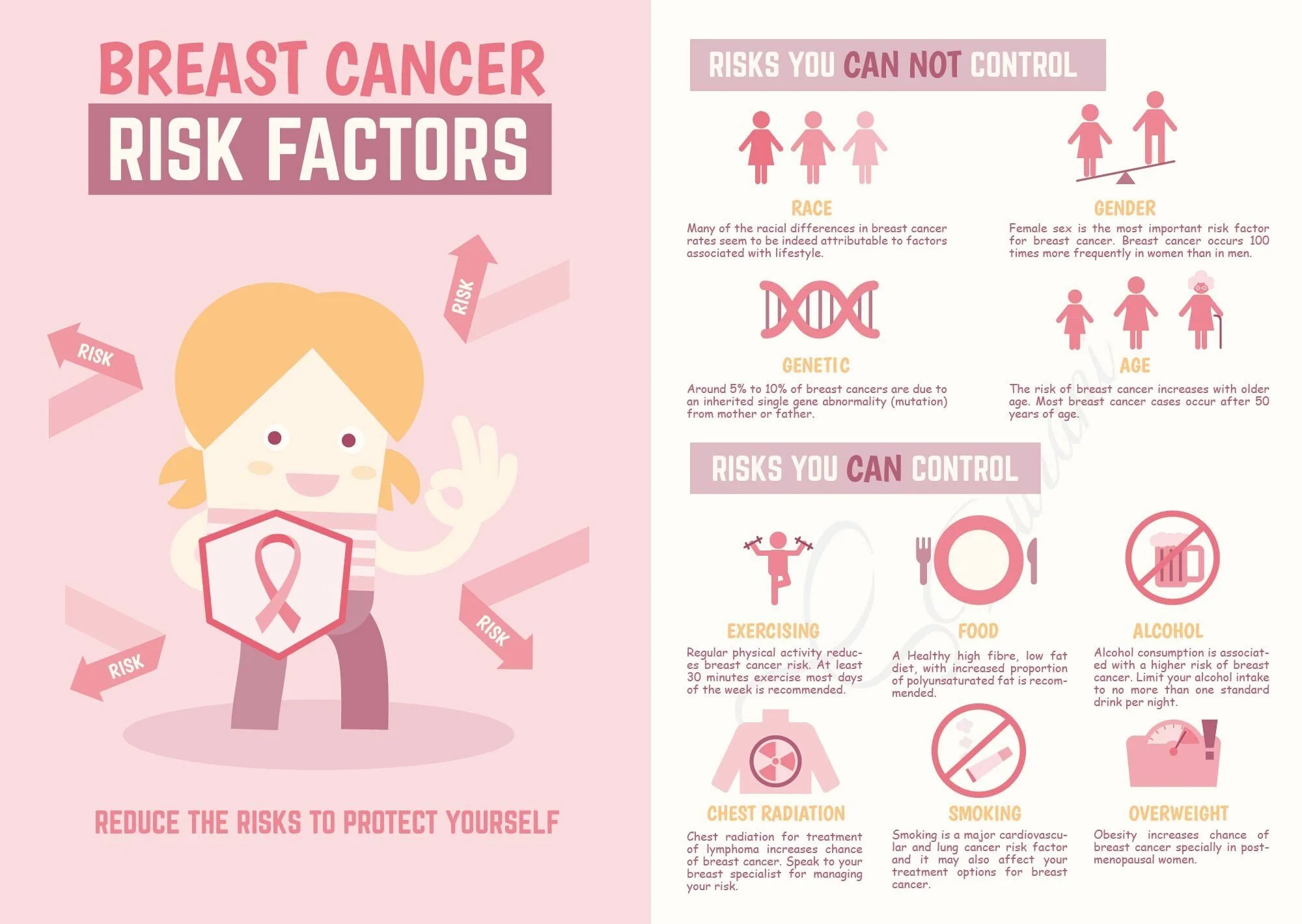
Risk Factors You Cannot Change
• Family history: Having a mother, sister, or aunt with breast or ovarian cancer increases your risk.
• Genes: Some people carry gene changes (like BRCA1 or BRCA2) that raise cancer risk. A blood test can check for this.
• Age: Cancer risk increases as you get older, though young women can still develop cancer.
• Previous cancer: Having had cancer before raises the risk of it returning or developing a new cancer.
Risk Factors You CAN Change
• Smoking: Cigarette smoke causes several types of cancer, including lung, cervical, and oral cancers.
• Drinking alcohol: Even small amounts of alcohol raise breast cancer risk. Alcohol should be completely avoided in pregnancy.
• Being overweight: Excess body fat, especially around the belly, is linked to several cancers.
• Physical inactivity: Regular exercise reduces cancer risk by helping control weight and hormone levels.
• Unhealthy diet: Eating too much processed food, red meat, and sugar increases risk. Eating more fruits, vegetables, and fibre is protective.
• HPV infection: The Human Papillomavirus (HPV) is the main cause of cervical cancer. It spreads through sexual contact. A vaccine is available.
• Sun exposure: Too much sun without protection raises the risk of skin cancer (melanoma).
SECTION 5: Prevention — How to Protect Yourself
You cannot prevent all cancers, but there is a lot you can do to lower your risk significantly. Think of these as gifts you give to yourself and your baby.
Eat Well
• Fill half your plate with colourful fruits and vegetables every day.
• Choose wholegrains like brown rice, oats, and wholemeal bread over white/refined carbohydrates.
• Limit red and processed meats (like sausages, bacon, and tinned meat).
• Cut down on sugary drinks and highly processed snacks.
• Eat more beans, lentils, fish, and nuts as protein sources.
Stay Active
• Aim for at least 30 minutes of moderate activity (like brisk walking) most days of the week.
• During pregnancy, speak with your midwife about safe exercises like walking, swimming, and prenatal yoga.
• Even light activity, like stretching and short walks,s is beneficial.
Know Your Body — Breast Self-Examination
It is important to know what your breasts normally look and feel like, so you can notice any changes early. Here is a simple guide:
How to Check Your Breasts (Monthly, After Your Period)
LOOK: Stand in front of a mirror with arms at your sides. Look for changes in shape, size, or skin. Then raise both arms above your head and look again.
FEEL (Standing or in the shower): Using the flat of your fingers, move in small circles. Cover the whole breast from armpit to the centre of your chest, and up to your collarbone.
FEEL (Lying down): Lie on your back with one arm behind your head. Feel the entire breast.
CHECK the nipple: Gently squeeze each nipple to check for any discharge.
IMPORTANT: During pregnancy and breastfeeding, breasts change a lot. Report any new, hard, or painless lump to your doctor right away — do not assume it is 'just a pregnancy change.'
Cervical Cancer Prevention: Get Screened & Vaccinated
• PAP SMEAR (Cervical Smear Test): A quick test where cells are gently collected from the cervix and checked for early changes. It does NOT diagnose cancer but can find pre-cancer changes before they become dangerous. Women should start from age 21 or as recommended in their country.
• HPV VACCINE: The HPV vaccine protects against the strains of the HPV virus that cause most cervical cancers. It is most effective before sexual activity begins, but can still protect if given later. Ask your doctor if it is right for you.
• It IS safe to have a pap smear during pregnancy. If you are overdue for one, ask your midwife.
Avoid Tobacco and Alcohol
• If you smoke, now is the best time to stop — for your health and your baby's. Ask your midwife for support.
• There is NO safe amount of alcohol in pregnancy. Alcohol is also linked to breast cancer.
SECTION 6: Antenatal Screening and Cancer Checks
Your antenatal (before birth) appointments are not just about checking the baby — they are also an important opportunity to check YOUR health. Do not be afraid to speak up about any symptoms or concerns at these visits.
What to Tell Your Midwife or Doctor
• Any new lumps or swellings anywhere in your body.
• Unexplained weight loss.
• Persistent tiredness that does not improve with rest.
• Unusual bleeding (from the vagina, in your urine, or from your bowel).
• Changes in moles or skin patches.
• A cough or hoarse voice that does not go away.
• Difficulty swallowing.
• Any family history of cancer, especially if close relatives were diagnosed young.
Remember: You Know Your Body Best
Healthcare providers see many patients and may focus mainly on the baby during antenatal visits.
You must SPEAK UP if something feels wrong with YOUR body.
Say: “I have noticed something I am worried about — can we please discuss it?”
No concern is too small. Early detection saves lives.
SECTION 7: Top Tips for Women of Childbearing Age
10 Essential Tips to Protect Your Health
Do your monthly breast self-examination. Choose a day each month and stick to it.
Attend all your antenatal appointments and do not skip postnatal checks.
Get your cervical smear (pap smear) when it is due. It takes less than 5 minutes and could save your life.
Ask your doctor about the HPV vaccine if you have not had it yet.
Know your family history. Ask relatives about any family history of cancer and tell your doctor.
Eat a rainbow every day — aim for at least 5 portions of fruits and vegetables.
Move your body. Even 20–30 minutes of walking a day makes a difference.
Do not ignore symptoms. If something feels wrong for more than 2–3 weeks, see a doctor. Do not wait.
Protect your skin. Use sunscreen, wear a hat, and avoid the midday sun when it is at its strongest.
Ask for emotional support. Cancer fear and a cancer diagnosis can be overwhelming. Counselling, support groups, and loved ones all help.
SECTION 8: Frequently Asked Questions (FAQs)
Q: Can cancer pass from a mother to her unborn baby?
A: This is extremely rare. In almost all cases, cancer does NOT spread to the baby. The placenta acts as a barrier that protects the baby. There have been a very small number of cases worldwide where cancer (especially melanoma) was found in a baby after birth, but this is exceptionally uncommon.
Q: If I had cancer before, can I still get pregnant?
A: Many women who have had cancer go on to have healthy pregnancies. However, some cancer treatments (like certain chemotherapy drugs or radiation to the pelvis) can affect fertility. If you are planning to have children in the future and need cancer treatment, speak to your doctor BEFORE treatment starts about fertility preservation options, such as freezing eggs or embryos.
Q: Is it safe to breastfeed if I have cancer?
A: It depends on the type of cancer and the treatment. If you are not receiving any treatment, breastfeeding is usually safe. If you are on chemotherapy, targeted therapy, or hormonal therapy, breastfeeding is generally NOT recommended as these medicines can pass into breast milk and harm the baby. Always ask your oncologist (cancer specialist) for specific guidance.
Q: My doctor found a lump in my breast while I am pregnant. Should I be worried?
A: Many breast changes during pregnancy are completely normal, such as tenderness, fullness, and even small lumps caused by hormonal changes or blocked milk ducts. However, any new, hard, painless, or growing lump should be checked by a doctor immediately. Do not assume it is normal just because you are pregnant. An ultrasound scan (which is safe in pregnancy) can usually help determine what the lump is.
Q: Will my cancer treatment affect my baby's brain development?
A: This depends heavily on the type of treatment and the stage of pregnancy. Treatment in the first 3 months (first trimester) carries the highest risk of harm to the baby because organs are forming. After 3 months, most chemotherapy drugs are less risky, though some risks remain. Brain development concerns are mainly linked to early exposure and premature birth. Your care team will monitor your baby carefully throughout.
Q: Do I have to terminate my pregnancy if I have cancer?
A: Not necessarily. This is a deeply personal decision and a medical one. In many cases, treatment can begin safely during pregnancy. Some women choose to delay certain treatments briefly until the baby is mature enough to be safely delivered. Termination is sometimes recommended when the cancer is very aggressive, and treatment cannot be delayed at all. However, this is the exception, not the rule. You have the right to be fully informed about all your options before making any decision.
Q: What is the difference between a tumour and cancer?
A: A tumour is simply an abnormal growth or lump of cells. Not all tumours are cancer! A BENIGN tumour does not invade nearby tissue and does not spread to other parts of the body. It is usually not dangerous. A MALIGNANT tumour IS cancer — it can invade nearby tissues and spread (metastasise) to other organs.
Q: How often should I check my breasts for lumps?
A: Once a month is recommended. The best time is a few days after your period ends, when your breasts are least swollen and tender. During pregnancy, breasts change a lot, making self-examination harder — but you should still look for unusual lumps, especially ones that are hard, fixed, or growing. Report any findings to your midwife or doctor promptly.
Q: Can stress cause cancer?
A: There is no proven direct link between stress and cancer. However, chronic stress can lead to unhealthy behaviours like smoking, drinking alcohol, poor diet, and lack of sleep, which are all risk factors for cancer. Managing stress through exercise, good sleep, social support, and mindfulness is good for your overall health.
Q: I am scared to go for a check-up in case they find something. What should I do?
A: This is one of the most common fears women have. It is completely understandable. But consider this: catching cancer early — before it has spread — is when it is most treatable and most curable. Avoiding check-ups does not prevent cancer; it only allows it to grow longer without treatment. Going for a check-up is an act of courage and love — for yourself and for your family. Take a trusted friend or partner with you for support if it helps.
A Final Word from Your Antenatal Team
Your health matters just as much as your baby's health.
Please do not put yourself last. Attend your appointments, report symptoms early, eat well, stay active, and never be afraid to ask questions.
You are not alone. Your midwife, doctor, and support team are here for you.
"The best time to take care of your health is now. The second-best time is still now."
Produced for Antenatal Education
For personal medical advice, always consult your qualified healthcare provider.