Antenatal
IMPORTANCE OF FAMILY PLANNING
May 16, 2026
|
148 views
Contraception — Methods used to prevent pregnancy
Birth Spacing — The time gap between one birth and the next
Antenatal Care (ANC) — Health care received during pregnancy
Postnatal Care — Health care given after delivery
Reproductive Health — Total well-being related to the reproductive system
IMPORTANCE OF FAMILY PLANNING
A Comprehensive Antenatal Health Education Guide for Nigerian Families
For Educational and Health Awareness Purposes Only
DISCLAIMER: This guide is strictly for educational and health awareness purposes. It is intended to inform Nigerian families — particularly pregnant women and their partners — about family planning during and after pregnancy. It does not replace professional medical advice. Always consult a registered midwife, nurse, or medical doctor for personal health guidance.
1. WHAT IS FAMILY PLANNING?
Family planning refers to the conscious effort by individuals and couples to determine the number of children they want, when to have them, and the spacing between births. It involves the use of safe, effective, and acceptable methods to control fertility.
In Nigeria, family planning is a critical public health priority. According to the National Population Commission, the average Nigerian woman has about 5.3 children, one of the highest fertility rates in the world. Proper family planning can transform maternal and child health outcomes significantly.
Key Terms to Know:
Contraception — Methods used to prevent pregnancy
Birth Spacing — The time gap between one birth and the next
Antenatal Care (ANC) — Health care received during pregnancy
Postnatal Care — Health care given after delivery
Reproductive Health — Total well-being related to the reproductive system
2. WHY FAMILY PLANNING MATTERS IN ANTENATAL CARE
Antenatal care is the ideal time to discuss and plan for family planning. Pregnancy brings a woman face-to-face with the realities of childbirth, recovery, and parenting — making her more open to planning future pregnancies wisely.
For the Mother:
Reduces the risk of complications from closely spaced pregnancies — anaemia, haemorrhage, and eclampsia are all more common when births are too close together.
Allows full physical recovery. The body needs at least 18–24 months to recover after childbirth.
Reduces maternal mortality. Nigeria has one of the highest maternal death rates globally, and close birth spacing is a major contributing factor.
Allows mothers to exclusively breastfeed for 6 months without the complication of a new pregnancy.
Protects mental health and prevents postpartum depression worsened by rapid subsequent pregnancies.
Gives women the opportunity to pursue education, career, and personal development.
For the Baby:
Ensures adequate attention, nutrition, and care for each child.
Reduces infant mortality — babies born too close together have a higher risk of low birth weight and death.
Promotes complete breastfeeding, which improves brain development and immunity.
Ensures better emotional bonding between the mother and each child.
For the Family and Society:
Fewer dependants per income means a better quality of life for each child.
Better educational opportunities when family size is manageable.
Reduced household poverty and food insecurity.
Contributes to Nigeria's overall economic development by reducing population pressure.
3. FAMILY PLANNING METHODS EXPLAINED
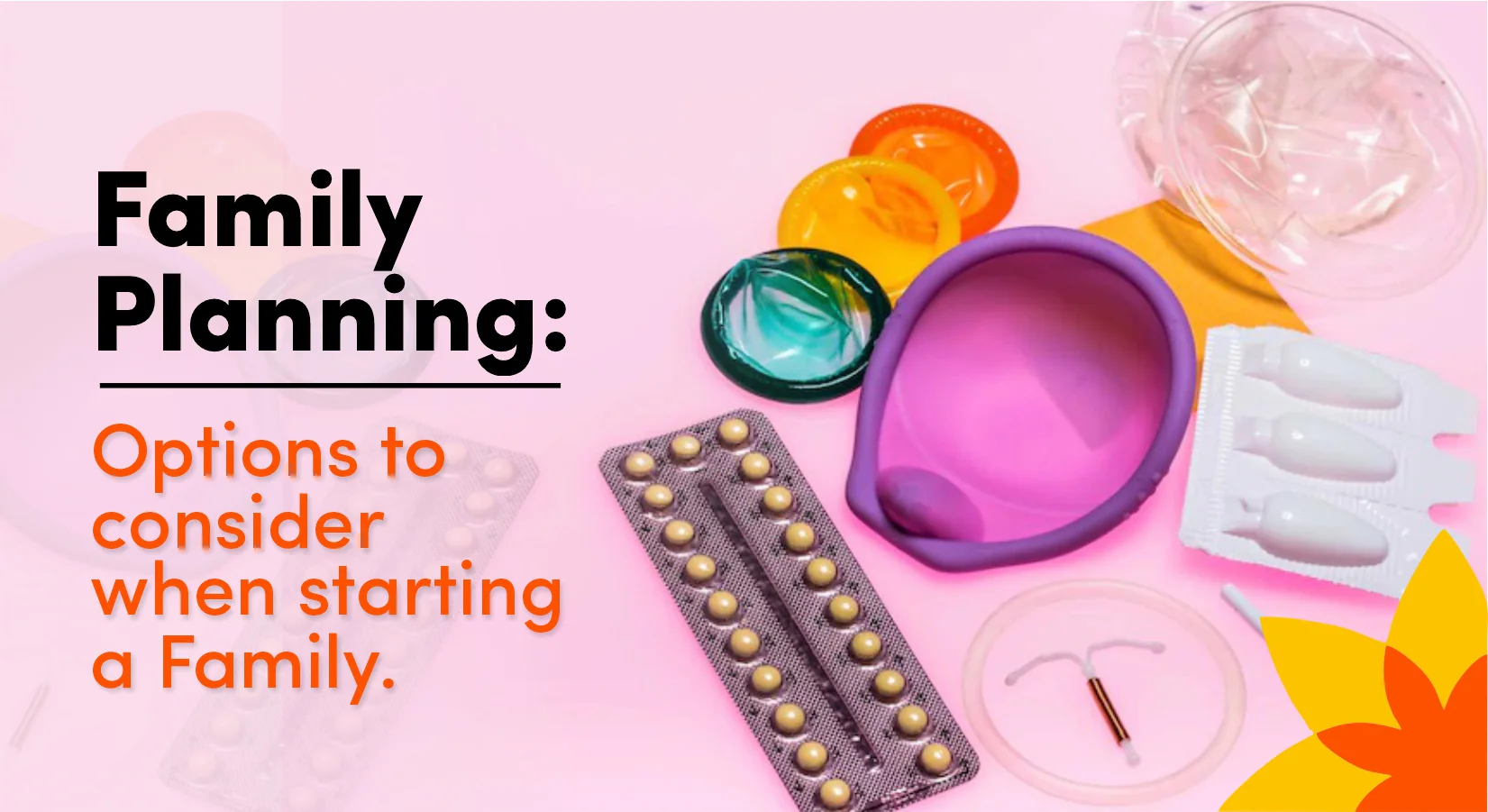
There are several family planning methods available in Nigerian health facilities. They differ in how they work, how long they last, and who they are suitable for. A healthcare provider can help you choose the best one for your situation.
Male Condom — Widely available at pharmacies, clinics, and NAFDAC-approved outlets. Prevents pregnancy AND sexually transmitted infections (STIs). Free at most Primary Health Centres (PHCs).
Female Condom — Inserted into the vagina before sex. Gives the woman control. Also protects against STIs.
Combined Oral Pill ("The Pill") — Taken daily at the same time. Very effective when used correctly. Not suitable for breastfeeding mothers (use the progestogen-only pill instead).
Progestogen-Only Pill (Mini-Pill) — Safe for breastfeeding mothers. Must be taken at the same time every day.
Injectable (e.g., Depo-Provera) — Given every 3 months. Very popular in Nigeria due to ease of use and privacy. Available at PHCs and hospitals.
Implant (e.g., Implanon, Jadelle) — Small rods inserted under the skin of the upper arm. Lasts 3–5 years. Highly effective and reversible. Free or low-cost at many Nigerian public hospitals.
Copper IUD (Intrauterine Device / Copper-T) — Inserted into the womb by a trained provider. Lasts 5–10 years. Non-hormonal. Safe for breastfeeding mothers. Available at hospitals.
Emergency Contraception ("Morning After Pill") — Used within 72 hours of unprotected sex. NOT for regular use. Available in pharmacies (e.g., Postinor-2). Does not protect against STIs.
Bilateral Tubal Ligation (Female Sterilisation) — A permanent surgical procedure for women certain they want no more children. Requires informed consent. Available at tertiary hospitals.
Vasectomy (Male Sterilisation) — A permanent, safe, and simple procedure for men. Highly effective. Available at tertiary hospitals.
Natural Family Planning / LAM — The Lactational Amenorrhoea Method (LAM) works for exclusively breastfeeding mothers in the first 6 months only. Less reliable than hormonal methods.
4. FAMILY PLANNING DURING PREGNANCY (ANTENATAL)
While you cannot use most contraceptives during pregnancy, your antenatal visits are the best time to plan for post-delivery contraception. Your midwife or doctor can counsel you early so you are fully prepared after birth.
What to Discuss at Your Antenatal Visits:
Your desired family size — how many children do you and your partner want?
How many children do you already have, and how recent was the last birth?
Any medical history that may affect your contraceptive choice.
Whether you plan to breastfeed, as this affects which method is appropriate.
Your partner's awareness and involvement in family planning.
Which contraceptive method would you like to start after delivery?
When to Start After Delivery:
Immediately (0–48 hours): Copper IUD, tubal ligation, condoms, LAM (if exclusively breastfeeding).
4–6 weeks postpartum: Injectable (Depo-Provera), implant, progestogen-only pill.
After 6 weeks (non-breastfeeding): All methods, including the combined oral contraceptive pill.
After 6 months: LAM is no longer reliable — switch to another method immediately.
5. ADDRESSING CULTURAL AND RELIGIOUS CONCERNS IN NIGERIA
Nigeria's diverse cultural and religious landscape shapes attitudes towards family planning. Many families have genuine concerns rooted in faith, tradition, or misinformation. These deserve respectful, honest responses.
"Family planning is against God's will."
Many faith leaders — Christian and Muslim — support responsible parenthood. Spacing births to protect mother and child can be seen as stewardship and care for the family God has given you.
"Contraceptives make women permanently infertile."
Modern reversible contraceptives do not cause permanent infertility. Fertility returns after stopping most methods. IUDs, implants, and injectables are all fully reversible.
"Men should not be involved in family planning."
Family planning works best when couples decide together. A husband's support significantly increases success and reduces stress on the woman.
"Large families are a blessing."
Children are indeed a blessing, but their well-being matters. A well-spaced family with access to education and nutrition is a greater blessing than many children without resources to thrive.
"Contraceptives cause cancer."
Major international health bodies — WHO, CDC — confirm that modern contraceptives do not cause cancer. Some methods, like the hormonal IUD, may actually reduce the risk of certain cancers.
"Family planning is only for educated or city women."
Family planning is for every Nigerian woman — urban or rural, educated or not. Community Health Extension Workers (CHEWs) provide services even in remote villages.
"Is family planning halal?"
The majority of Islamic scholars, including leading Nigerian Islamic organisations, permit reversible family planning methods used with the mutual consent of both spouses. The Quran emphasises the welfare of mother and child, which birth spacing directly supports.
Involving Your Husband or Partner:
Choose a calm, private moment for the conversation.
Share what you learned at your antenatal visit about birth spacing and health risks.
Frame it as a decision for the whole family's well-being, not just a personal choice.
Invite your partner to attend an antenatal session or meet the midwife together.
Acknowledge his views and concerns without dismissing them.
6. PRACTICAL TIPS FOR NIGERIAN WOMEN AND FAMILIES
Tip 1 — Start the Conversation Early. Do not wait until after delivery to think about family planning. Use your antenatal appointments — ideally from the first visit at or before 12 weeks — to discuss post-delivery contraception with your midwife. Early planning means better preparation.
Tip 2 — Know Where to Get Services. Family planning services are available at Primary Health Centres (PHCs) in every local government area, Federal and State General Hospitals, Teaching Hospitals, Marie Stopes International Nigeria clinics, Planned Parenthood Federation of Nigeria (PPFN) clinics, and private hospitals. Many services are free or heavily subsidised at public facilities.
Tip 3 — Track Your Menstrual Cycle. After delivery, track when your period returns. This helps you and your provider choose the right contraceptive and detect any irregularities early. A simple calendar or a free app like Flo can help, even on a basic smartphone.
Tip 4 — Exclusive Breastfeeding Supports Natural Spacing. Exclusively breastfeeding your baby — no water, no formula, only breast milk — for the first 6 months suppresses ovulation and can prevent pregnancy (LAM). However, this is only reliable if you are fully breastfeeding, your period has not returned, and the baby is under 6 months. Once any condition changes, switch to another method immediately.
Tip 5 — Do Not Rely on Myths or Traditional Methods Alone. Methods like "pulling out" (coitus interruptus) or using herbs to prevent pregnancy are unreliable and can be dangerous. Always use proven, medically approved methods and obtain them from registered health facilities — not roadside vendors or market stalls.
Tip 6 — Know the Warning Signs After Starting a Contraceptive. Contact your healthcare provider immediately if you experience severe headache or visual changes (pill users), chest pain or shortness of breath, heavy or prolonged vaginal bleeding, severe abdominal pain (IUD users), or signs of infection at an implant site — swelling, pus, or fever.
Tip 7 — Attend ALL Antenatal Appointments. WHO recommends at least 8 antenatal visits during pregnancy. Many Nigerian women attend fewer than 4. Each visit is an opportunity to discuss family planning, monitor your health, and prepare for a safe delivery and recovery. Do not skip them.
7. FREQUENTLY ASKED QUESTIONS (FAQs)
Q: Is it safe to start family planning immediately after giving birth?
A: Yes, for many methods. Condoms and the copper IUD can be started immediately after delivery. The Depo-Provera injection and implant can begin at 4–6 weeks. Oestrogen-containing pills should be waited at least 6 weeks and are not recommended while breastfeeding.
Q: Will contraceptives affect my breast milk or my baby?
A: Oestrogen-containing pills can reduce milk supply and should be avoided while breastfeeding. Progestogen-only methods — mini-pill, Depo-Provera, implant — and non-hormonal methods like the copper IUD and condoms do not significantly affect breast milk quality or quantity and are safe for your baby.
Q: How soon after delivery can I get pregnant again?
A: Ovulation can return as early as 3–4 weeks after delivery, even before your first period returns — meaning you can conceive before you even know you are ovulating. Do not assume you are safe just because your period has not yet returned.
Q: My husband does not support family planning. What can I do?
A: Invite your husband to attend an antenatal session where a midwife can address his concerns directly. Many men change their minds when they hear from a health professional. Some women also choose discreet methods — injectable, implant, or IUD — that do not require partner visibility. Your health is your right. You can speak to your midwife confidentially.
Q: Is family planning the same as abortion?
A: No. Family planning prevents pregnancy before it occurs. Abortion ends an existing pregnancy. These are entirely different things. Many faith traditions that oppose abortion fully support family planning as responsible parenthood.
Q: Can I use the injection while breastfeeding?
A: Yes. Depo-Provera (progestogen-only injection) is one of the recommended methods for breastfeeding mothers. It can safely be started from 6 weeks postpartum, does not significantly affect milk supply, and is available at most Nigerian PHCs.
Q: Does the IUD cause infections or damage the womb?
A: When inserted by a trained provider in a clean environment, the IUD is very safe. It does not cause infections or permanent infertility. Complications are usually related to pre-existing STIs at the time of insertion, which is why providers screen for infections first. Never accept IUD insertion from an unqualified source.
Q: How long should I wait before having another baby?
A: The WHO recommends waiting at least 24 months (2 years) after a live birth before trying to conceive again. After a miscarriage or abortion, at least 6 months is recommended. This spacing significantly reduces risks for both mother and baby.
Q: Can an unmarried or young woman access family planning services in Nigeria?
A: Yes. Reproductive health rights apply to all women regardless of age or marital status. Youth-friendly health services are available in many states. No woman should be denied family planning information or services.
Q: Are family planning services really free in Nigeria?
A: Many services are free or heavily subsidised at government PHCs and state hospitals under the National Family Planning Programme. Availability varies by location. Marie Stopes Nigeria and PPFN clinics also offer low-cost or sliding-scale services.
Q: What is the safest method if I have never used contraception before?
A: For first-time users, the injectable (Depo-Provera) or implant is often recommended in Nigerian settings due to ease of use and high effectiveness. Condoms are also an excellent starting option with no hormones. Speak with your midwife — she will assess your health history and recommend the most suitable method for you.
Q: Can family planning fail?
A: No method except abstinence is 100% effective, but modern methods are very highly effective when used correctly and consistently. The implant and IUD are among the most reliable, with over 99% effectiveness. Condoms, when used correctly every time, are about 98% effective. Your provider can explain effectiveness rates and how to use your chosen method correctly.
8. KEY MESSAGES TO REMEMBER
Family planning saves lives. Birth spacing protects both mother and baby.
Your body needs at least 24 months to fully recover between pregnancies.
Start discussing family planning at your very first antenatal visit.
Choose a method that suits your health, your lifestyle, and your breastfeeding plans.
Involve your husband or partner — family planning is a shared responsibility.
Free and low-cost services are available at PHCs across Nigeria.
Do not rely on myths, herbs, or unverified traditional methods.
You have a right to information and services regardless of age or marital status.
Always follow up with your healthcare provider if you experience side effects.
A planned, healthy family is a stronger family. Every child deserves to thrive.
"A healthy mother raises a healthy nation."