Antenatal
Care of the Newborn: From Head to Toe
April 17, 2026
|
153 views
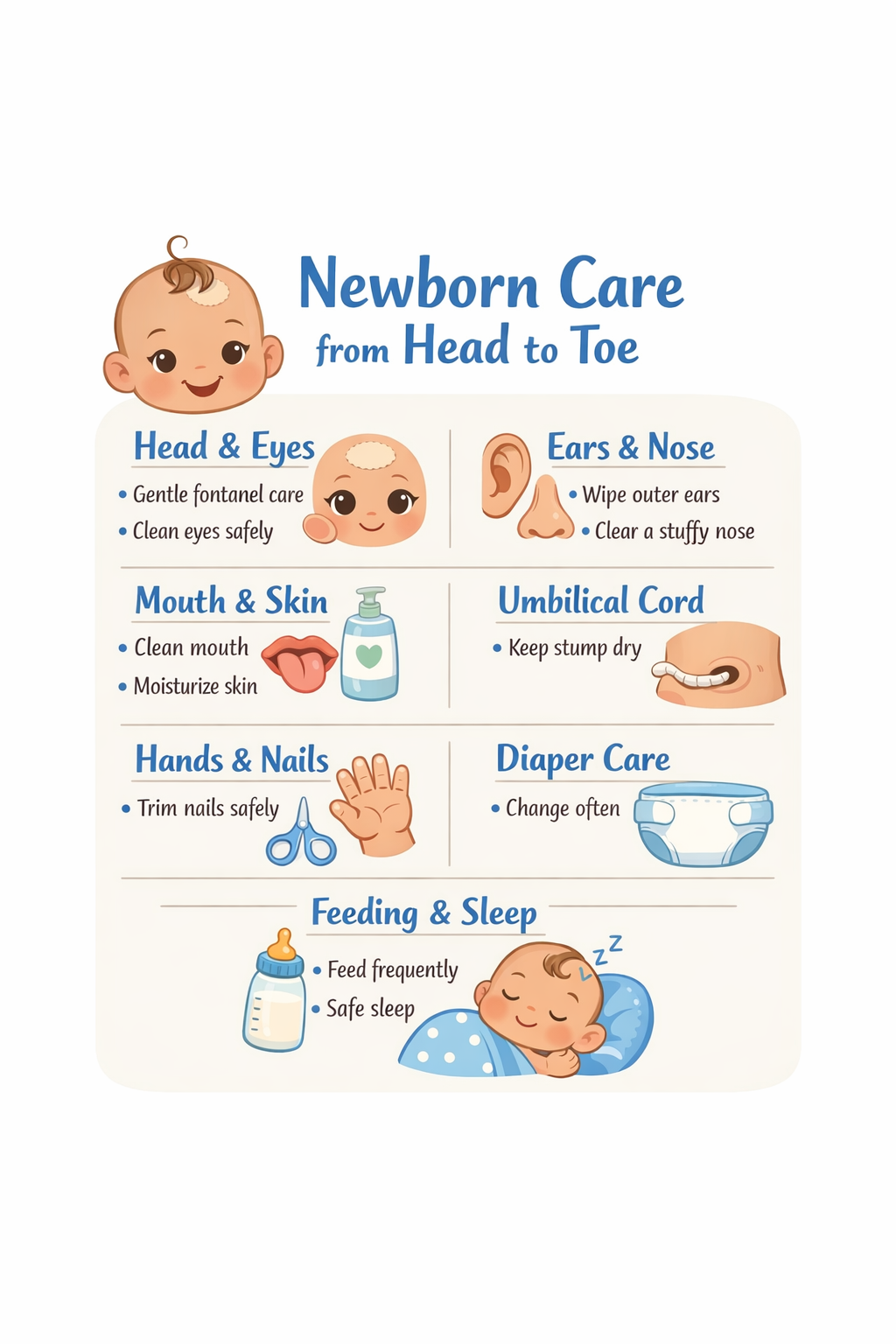
A newborn needs gentle, consistent care. Everything is new to them: light, sound, touch, feeding, sleep, and even breathing outside the womb. This guide walks through full-body care step by step, with practical tips and common questions parents often ask.
1. Head and Brain Care
Soft spots (fontanelles)
Newborns have soft areas on the head because the skull bones are not fully fused yet. These spots allow brain growth.
How to care
Handle the head gently and always support the neck.
You can touch and wash the scalp normally. The soft spot is protected by a tough membrane.
Slight pulsing is normal.
Cradle cap
Yellow or white flaky patches may appear on the scalp.
What helps
Wash hair 2–3 times weekly with mild baby shampoo.
Massage scalp gently with baby oil or petroleum jelly.
Use a soft brush to remove flakes.
Avoid: Picking flakes aggressively. This can cause irritation or infection.
2. Eye Care
Newborn eyes may look puffy, watery, or slightly crossed.
Daily care
Clean with cotton wool dipped in warm water.
Wipe from the inner corner to the outer corner.
Use a fresh cotton pad for each eye.
Watch for
Yellow or green discharge.
Redness or swelling.
These may signal an eye infection or a blocked tear duct.
3. Ears Care
Ears clean themselves naturally.
Safe cleaning
Wipe only the outer ear with a soft cloth.
Never insert cotton buds inside the ear canal.
Red flags
Bad smell from the ear
Fever with ear pulling
Fluid leaking from the ear
These need medical attention.
4. Nose Care
Newborn noses are tiny and easily blocked.
Normal signs
Sneezing is common. It clears dust and mucus.
Mild congestion happens often.
How to help
Use saline drops if the nose is blocked.
Use a nasal aspirator gently if needed.
5. Mouth and Tongue Care
White coating on the tongue may be milk residue or oral thrush.
Daily care
Wipe gums gently with clean, damp gauze once a day.
No toothpaste needed.
See a doctor if
Thick white patches won’t wipe off.
Baby refuses to feed.
6. Skin Care
Newborn skin is delicate and sensitive.
Bathing
Bath 2–3 times weekly is enough.
A daily sponge bath is okay in hot climates.
Use lukewarm water.
Use mild, fragrance-free baby soap.
Bath time should be 5–10 minutes.
Common skin conditions
Dry peeling skin:- Normal in the first weeks. Use a light baby moisturizer.
Baby acne:- Small red pimples. Usually clears on its own.
Heat rash:- Tiny red bumps from sweating. Keep the baby cool.
Diaper rash:- Caused by moisture and friction.
Prevention
Change diapers often.
Clean gently with warm water.
Let the baby air-dry before a new diaper.
Use diaper rash cream if needed.
7. Umbilical Cord Care
The stump usually falls off within 1–3 weeks.
Care routine
Keep it clean and dry.
Fold the diaper below the stump.
Clean with plain water and dry well.
See a doctor if
Bad smell
Pus discharge
Red skin around the cord
Fever
8. Hands and Nails
Newborn nails grow fast and are sharp.
Safe trimming
Trim when the baby is sleeping.
Use baby nail clippers.
Cut straight across.
File rough edges gently.
9. Genital Care
Baby girls
Clean front to back.
Mild white discharge is normal due to maternal hormones.
Baby boys
Wash the penis gently.
Do not force the foreskin back.
10. Legs, Feet, and Movement
Newborn legs may look bowed. This is normal.
Healthy signs
Kicking and stretching.
Moving arms and legs equally.
Massage
Gentle baby massage improves bonding and sleep.
11. Feeding Care
Breastfeeding
Feed every 2–3 hours.
Signs of hunger:
Rooting
Hand sucking
Restlessness
Bottle feeding
Sterilize bottles properly.
Hold the baby upright while feeding.
Burp after feeding.
Burping positions
Over shoulder
Sitting upright on the lap
Lying across lap
12. Sleep Care
Newborns sleep 16–18 hours daily.
Safe sleep rules
Baby sleeps on its back.
Use a firm mattress.
No pillows or toys in crib.
Room sharing is safer than bed sharing.
13. Temperature Regulation
Newborns cannot regulate temperature well.
General rule
Dress the baby in one more layer than an adult would wear.
Signs baby is too hot:
Sweating
Red cheeks
Fast breathing
Signs baby is cold:
Cool hands and feet
Fussiness
14. Emotional Care and Bonding
Newborns need comfort and closeness.
Ways to bond
Skin-to-skin contact
Talking softly
Singing
Eye contact
Gentle rocking
Crying is communication, not misbehavior.
Practical Tips for Parents
Wash your hands before handling the baby.
Keep visitors limited in the first weeks.
Do not shake a baby.
Learn your baby’s cues and patterns.
Trust your instincts. If something feels wrong, seek help.
Frequently Asked Questions (FAQs)
1. How often should I bathe my newborn?
2–3 times per week is enough. Daily sponge baths are fine in hot weather.
2. When will the umbilical cord fall off?
Usually within 1–3 weeks.
3. Is sneezing normal in newborns?
Yes. It helps clear tiny nasal passages.
4. Why does my baby hiccup often?
Hiccups are very common and harmless.
5. How often should newborns feed?
Every 2–3 hours, day and night.
6. Should I wake my baby for feeding?
Yes, if the baby sleeps longer than 3–4 hours in the early weeks.
7. When can I take my newborn outside?
After the first few days, short outings are fine. Avoid crowded places initially.
8. How do I know if my baby is getting enough milk?
Signs include:
6–8 wet diapers daily
Steady weight gain
Baby seems satisfied after feeding
9. Is it normal for newborns to cry a lot?
Yes. Crying peaks around 6–8 weeks.
10. When should I call a doctor urgently?
If the baby has:
Fever
Trouble breathing
Refuses feeding
Yellow skin spreading (jaundice)
Unusual sleepiness
Persistent vomiting
Caring for a newborn can feel overwhelming at first. With time, routine develops and confidence grows. Gentle handling, cleanliness, feeding, warmth, and love are the foundations of healthy newborn care.